AI-enabled Cyberattacks Stop Here.
AI-enabled Cyberattacks Expose a Structural Gap.
Every defense type has a boundary where it stops working. AI-enabled exploitations target those boundaries precisely.
- OS-based access controls can be disabled once AI-speed attacks gain sufficient privileges
- Memory randomization techniques can be bypassed by information leaks, exposing current process memory.
- Patch management is reactive by-design. AI-enabled exploits arrive in hours.
- Monitoring solutions do not protect the device or the container. Incident response cycles are much slower than AI attacks.
XGuard Hardening Depth.
Each security control targets a distinct attack vector. Together they create a defense-in-depth barrier that secures the device or the container against AI-enabled cyberattack kill chains.
| Attack vector | XGuard control |
|---|---|
Launch exploit script | Binaries allowlist |
Python abuse | Deep Python protection |
Abuse of legitimate binaries | Execution access control |
Modify sensitive files | File & directory protection |
Access data at-rest | Data encryption |
Memory scraping / credential harvesting | Process access control |
Unauthorized peripheral access | Device access control |
Code-reuse attack (ROP/JOP) | Control flow integrity |
Tamper-Proof: Root Compromise Cannot Disable XGuard.
XGuard security policy is cryptographically signed with a private key held externally - not on the device. An attacker who gains full root access still cannot modify or disable XGuard. They must obtain an external key they do not have.
This is the fundamental difference between a hard barrier and a friction-based defense.
Designed For Constrained Hardware.
The agent is ultra-lightweight, granularly tunable, and imposes no measurable impact on device operation.
Integrated at Build Time. Transparent to R&D.
XGuard is applied as part of the existing image creation process. R&D teams do not need to change their workflows. No architecture changes. The policy is auto-generated from the firmware image and cryptographically signed — hardening is in place before the device ships.
Deployed over Millions of Devices.
XGuard has been validated in production across edge devices, energy, automotive, and medical industries — hardening devices against exploitation of known and unknown vulnerabilities, under real operational constraints, without disrupting R&D or product timelines.
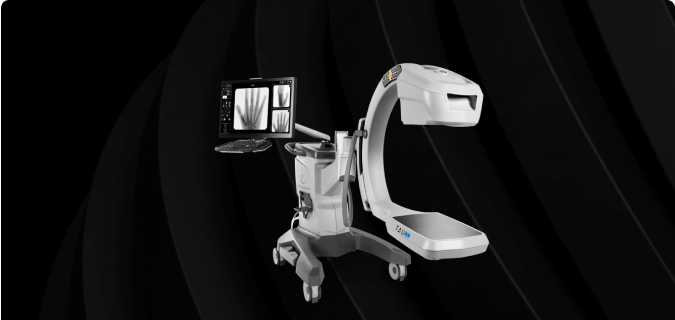
Medical Devices
Meet FDA Regulations
Enabling a medical device manufacturer to meet customer and regulatory premarket requirements
 Download case study
Smart Energy
Solar Inverter Security
Secure existing inverter architecture, deployed in over 128 countries
Download case study
Automotive
Secure Trucks’ Telematics/Gateway
Seamless hardening of trucks, enabling retrofitting a fleet of 1M trucks
Download case studyGet Started
Request an XGuard Demo.

Israel
24 HaNagar Street
Hod Hasharon
45277-13
Tel: +972 9 88 66 113
USA
41000 Woodward Ave
Building East, Suite 350
Bloomfield Hills, MI 48304
Tel: +1 833 4KARAMBA